
Mixed-function integration
Sources, converters, filters, amplifiers, and control functions can be combined where the application benefits from one packaged unit.
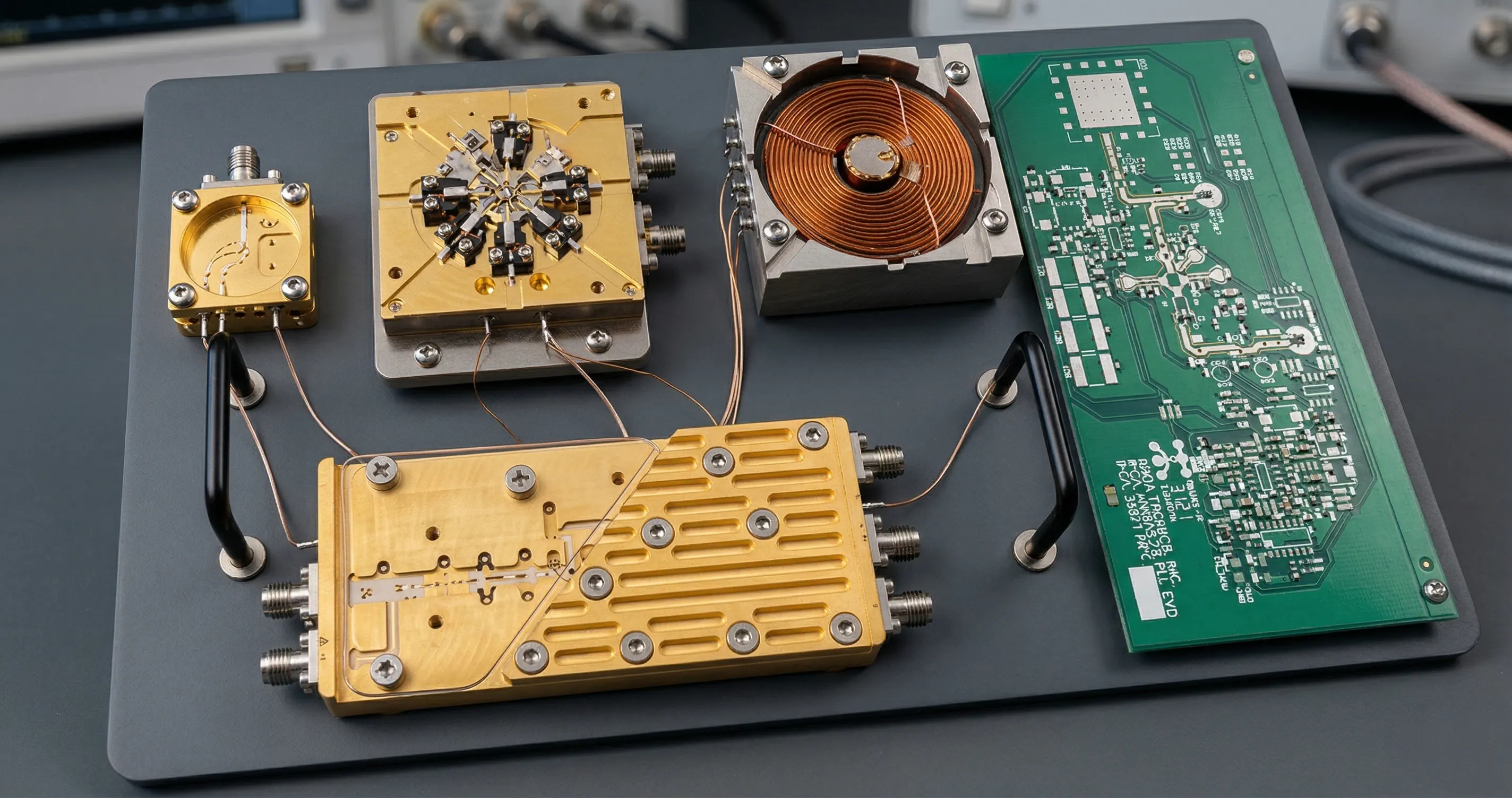
INTEGRATED MICROWAVE ASSEMBLIES
Microsource integrated microwave assemblies bring multiple RF functions together into one packaged subsystem when the application needs fewer interfaces, more customization, and a clearer implementation path.
This is where Microsource's custom-engineering strength shows up most clearly: combining standard product building blocks and program-specific design work into one delivered subsystem.
Product overview
A packaged subsystem that combines multiple RF and microwave functions into one coordinated hardware solution rather than leaving them as separate modules.
Typically when the program needs fewer interfaces, a tighter mechanical envelope, or a cleaner path from requirement to deployable subsystem.
Subsystem integration
When the platform needs a packaged solution instead of separate modules, an integrated assembly can reduce interface complexity and make the signal chain easier to qualify.
Combines related microwave functions into a single assembly
Reduces interface burden between separate boxes or modules
Can be tailored to the signal chain, environment, and platform constraints
Helpful when the application is more about system fit than a single component
The best results come from defining the signal chain early, then deciding which standard functions can be reused and which parts of the subsystem need true custom engineering.
Capabilities
The goal is not simply to place parts on one enclosure. It is to reduce system friction and make the RF path easier to deploy.
Sources, converters, filters, amplifiers, and control functions can be combined where the application benefits from one packaged unit.
Fewer separate modules can mean fewer mechanical and electrical handoffs to manage during integration.
The housing, connectors, and internal arrangement are selected around the actual platform requirement.
These assemblies are typically built to support a defined program or subsystem need rather than a generic catalog form factor.
Because these builds are custom by nature, the specification should start with the desired chain behavior and end with the packaging decision.
Applications
This category is most useful when the platform owner wants one subsystem rather than a collection of stand-alone microwave parts.
Useful when the source, translation, and conditioning stages need to live together inside a tighter package.
Appropriate when a system needs more coordination between RF functions than discrete modules can provide.
Can help align RF performance, packaging, and integration requirements inside a compact assembly.
A fit for program-specific requirements where the end result must be built as one deployed subsystem.
Representative evaluation points
Integrated assemblies are less about one universal performance table and more about forcing the right decisions to happen together: functions, interfaces, environment, and acceptance strategy.
| Parameter | Representative value |
|---|---|
| Subsystem objective | |
| Typical role | Combine multiple RF functions into one deployable package |
| Most common drivers | Interface reduction, mechanical consolidation, and coordinated RF behavior |
| What to define | |
| Function mix | Which sources, converters, filters, amplifiers, and controls belong inside the same unit |
| Interface count | What should remain external versus integrated into the assembly |
| Acceptance plan | How the full subsystem will be verified as one delivered unit |
| Program fit | |
| Environment | Temperature, vibration, screening, and deployment expectations for the full assembly |
Because these are application-specific assemblies, final electrical and environmental behavior should always be defined against the approved subsystem architecture.
Hardware
Integrated assemblies are judged by how effectively they reduce interface friction while preserving RF performance. Housing design, connector placement, and internal partitioning should all reflect the subsystem intent.
System integration
Integrated microwave assemblies sit at the system level, so the diagram is less about one signal translation and more about combining several functions into one coordinated package.
Representative integrated-assembly context
Packaging
Integrated assemblies are normally defined by the full program envelope, interface count, and environmental expectations.
Treat the assembly as a system design problem first and a packaging problem second.
Related solutions
Integrated assemblies are often built from the same component families already used elsewhere on the site.
Next step
Share the required functions, interfaces, and operating environment so Microsource can evaluate a practical integrated approach.